
Autonomous Freight Transport: Driving the Future of Logistics
Self-driving trucks, smart sensors, and AI-powered routing systems are reshaping how goods move across the world — faster, safer, and more efficiently than ever.
Introduction
This evolution goes beyond automation; it’s about creating self-operating logistics networks capable of learning, adapting, and optimizing performance with minimal human intervention.
What Is Autonomous Freight Transport?
Autonomous freight transport refers to the use of self-driving vehicles and intelligent control systems to transport goods without direct human input.
These systems rely on:
- Artificial Intelligence (AI): for navigation and decision-making.
- Lidar and radar sensors: to detect surroundings and obstacles.
- GPS and telematics: for route optimization.
- Vehicle-to-Infrastructure (V2I) communication: for connected traffic management.
- Cloud and IoT data: to synchronize vehicles with logistics control centers.
The goal is to enhance efficiency and safety while reducing operational costs and delays.
How It Works
- Perception: Cameras, sensors, and radar detect the environment.
- Decision-Making: AI algorithms interpret data to plan actions.
- Autonomous Driving: The vehicle executes navigation and control functions.
- Communication: Vehicles exchange real-time data with logistics networks.
- Optimization: Machine learning refines performance with every trip.
The result is an intelligent logistics system that learns continuously and operates 24/7.
Benefits of Autonomous Freight Transport
- Safety: Reduces accidents caused by fatigue or human error.
- Efficiency: Operates non-stop, maximizing delivery speed.
- Cost Reduction: Minimizes labor, fuel, and idle time.
- Predictability: Consistent routing and delivery performance.
- Sustainability: Optimized routes mean lower emissions.
- Data Insights: Continuous monitoring improves long-term planning.
Adopting autonomous freight transport is not just an innovation — it’s a competitive advantage.
Applications
- Long-Haul Trucking: Self-driving trucks for intercity or cross-border freight.
- Last-Mile Delivery: Autonomous vans for urban logistics.
- Warehouse Integration: Automated loading and unloading systems.
- Fleet Management: Real-time route coordination via AI.
- Port Operations: Autonomous vehicles for container handling.
Real-World Example
Companies like TuSimple, Aurora, and Einride have successfully tested autonomous freight vehicles across U.S. and European routes.
TuSimple, for instance, achieved fully autonomous freight delivery over 900 miles, reducing transit time by 10 hours and cutting fuel costs by 14%.
These advancements show how autonomy can redefine the logistics landscape.
The Future of Autonomous Freight
The future holds:
- AI-optimized logistics ecosystems with zero manual routing.
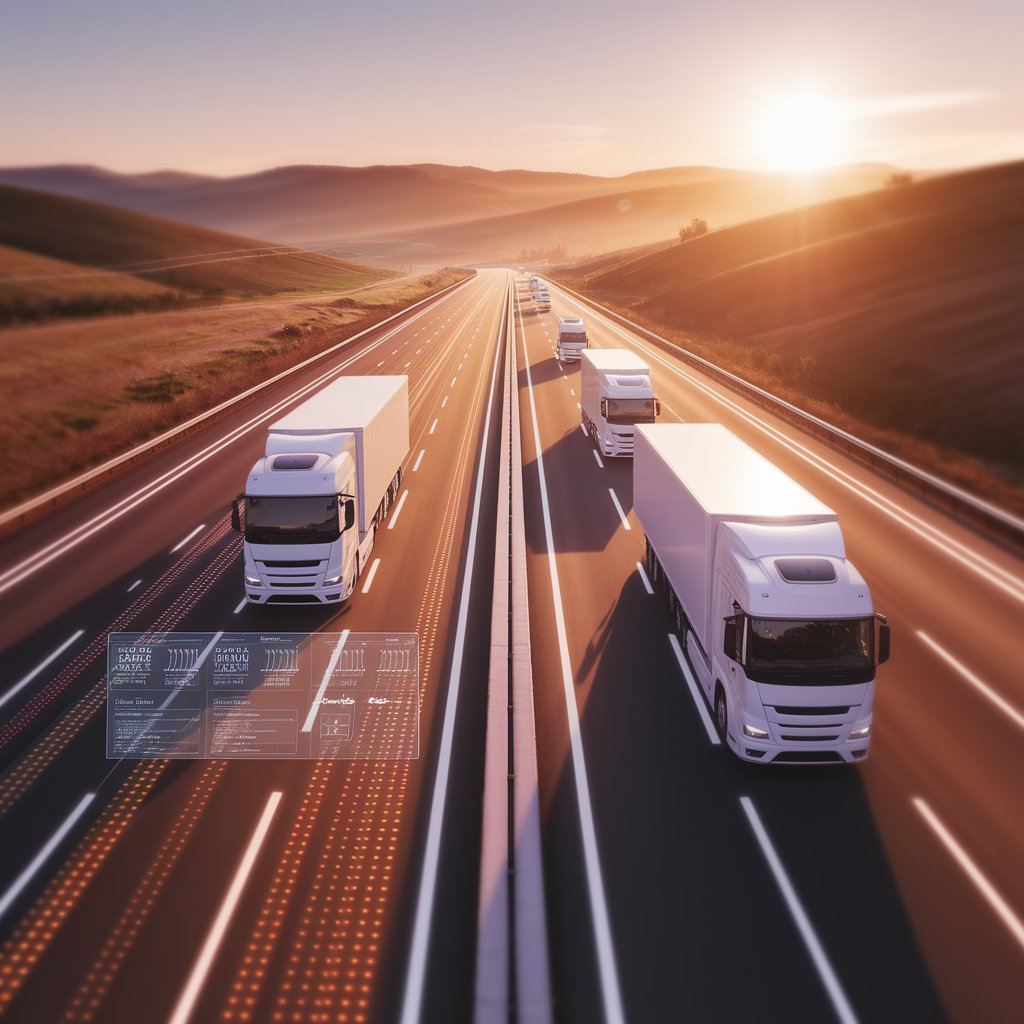
- Platooning convoys of connected autonomous trucks.
- Green autonomous fleets powered by electric energy.
- Digital twins to simulate and train vehicle algorithms.
- Global regulatory frameworks for autonomous operations.
Autonomy will turn freight transport into a self-sustaining digital network.
Conclusion
Autonomous freight transport is transforming logistics into an intelligent, self-operating ecosystem.
By merging AI, automation, and connectivity, it delivers safer, faster, and more sustainable supply chains.
The future of logistics isn’t driven by humans — it’s guided by data, intelligence, and autonomy.