
Supply Chain Scenario Planning: Preparing for Uncertainty with Data-Driven Decisions

What Is Supply Chain Scenario Planning?
Supply chain scenario planning is the process of modeling and analyzing different future scenarios to understand their potential impact on logistics operations, costs, service levels, and capacity.
Each scenario represents a combination of assumptions—such as changes in demand, supplier availability, transportation capacity, or external conditions—and helps organizations determine the best response strategies.
Why Supply Chain Scenario Planning Matters
Without scenario planning, organizations are forced to react to disruptions after they occur. Scenario planning shifts logistics from reactive to prepared.
Key benefits include:
- Better risk preparedness and resilience
- Improved strategic and tactical decision-making
- Reduced financial and operational impact of disruptions
- Alignment between planning and execution teams
- Greater confidence in high-impact decisions
Scenario planning transforms uncertainty into structured insight.

Core Components of Supply Chain Planning
1. Identification of Critical Variables
Key drivers such as demand levels, transportation capacity, supplier performance, costs, and lead times are identified and monitored.
2. Scenario Definition
Organizations create multiple scenarios, such as:
- Demand surge or decline
- Transportation disruptions
- Supplier shortages
- Cost increases or regulatory changes
3. Impact Modeling
Each scenario is simulated to assess its effect on inventory, service levels, costs, and operational capacity.
4. Response Evaluation
Potential actions—such as rerouting shipments, adjusting inventory levels, or changing suppliers—are evaluated before execution.
5. Integration with Planning Systems
Scenario insights are connected to planning and execution systems to support real-world decisions.
Common Use Cases
- Peak season and promotional planning
- Supplier risk management
- Network design and expansion
- Cost volatility and budget planning
- Global trade and compliance planning

How to Implement Supply Chain Scenario Planning
Step 1: Define Objectives
Clarify which decisions and risks scenario planning should support.
Step 2: Consolidate Data
Integrate logistics, financial, and operational data into a unified view.
Step 3: Build Relevant Scenarios
Focus on scenarios that are realistic and high-impact.
Step 4: Simulate and Analyze
Evaluate trade-offs between cost, service, and risk.
Step 5: Review and Update Regularly
Scenarios must evolve as conditions change.
Common Mistakes to Avoid
- Creating overly complex or unrealistic scenarios
- Treating scenario planning as a one-time exercise
- Failing to link scenarios to actionable decisions
- Using outdated or incomplete data
Avoiding these mistakes ensures scenario planning delivers value.
The Future of Supply Chain Scenario Planning
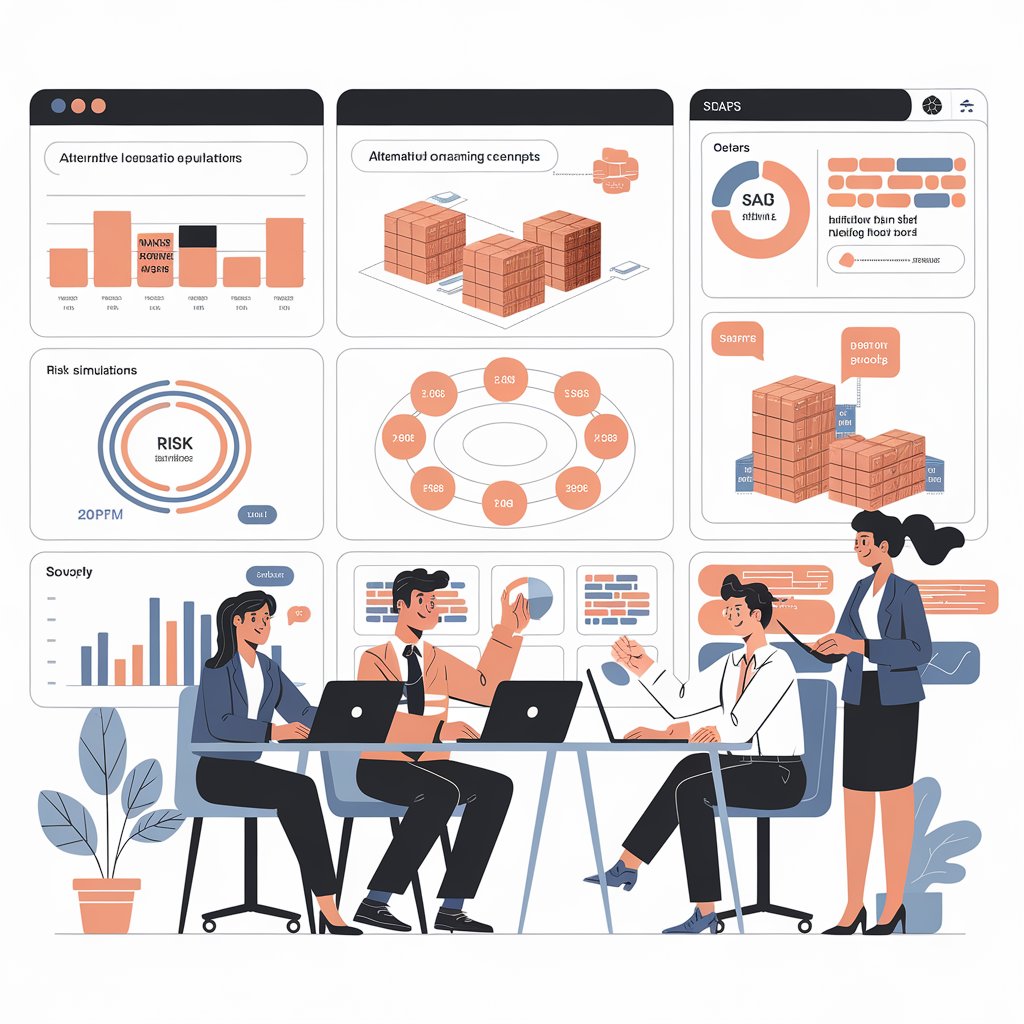
Scenario planning will increasingly leverage AI and advanced analytics to generate real-time simulations and automated recommendations. Organizations will be able to continuously evaluate scenarios and adjust plans dynamically.
Companies that invest in scenario planning will gain agility, resilience, and competitive advantage.
Conclusion
Supply chain scenario planning enables organizations to prepare for uncertainty and make better decisions under changing conditions. By modeling potential futures and evaluating responses in advance, logistics teams can reduce risk, protect service levels, and operate with confidence.
In modern supply chains, planning for multiple scenarios is no longer optional—it is essential.