
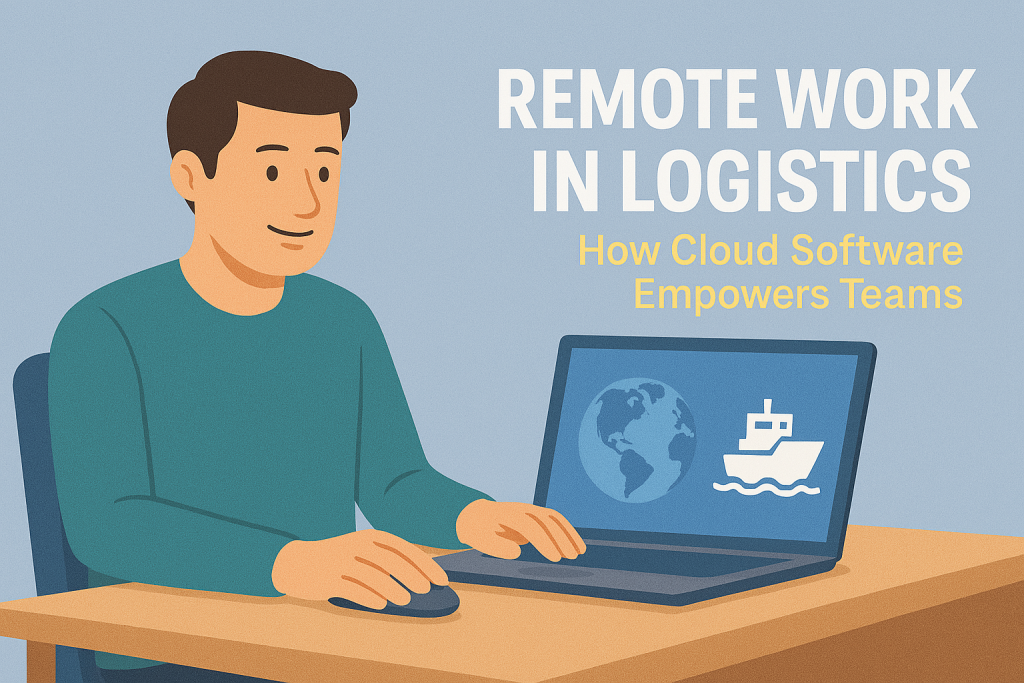
Remote Work in Logistics: How Cloud Software Empowers Teams
🚛 Why Remote Work Is Gaining Ground in Logistics
The logistics sector, once perceived as reliant on physical proximity and on-site coordination, is discovering the strategic advantages of remote-enabled workflows:
- Pandemic-led digital acceleration: The COVID-19 pandemic forced organizations to rethink operations, fast-tracking digital logistics adoption.
- Global talent access: Remote work allows logistics companies to hire talent from anywhere—optimizing for cost, skill, and time zones.
- Increased efficiency: Fewer bottlenecks, real-time visibility, and centralized communications foster faster decision-making.
Business continuity: Disruptions (like natural disasters or political unrest) don’t have to halt operations when everything is in the cloud.
☁️ What Is Cloud-Based Logistics Management?
Cloud-based logistics management refers to using web-based software to plan, coordinate, and track shipments and operations from any location. These platforms centralize data and automate processes, providing:
- Real-time tracking of freight and inventory
- Automated documentation for customs and compliance
- Centralized communication across departments and vendors
- Secure cloud storage for easy document sharing and collaboration
Platforms like Linbis offer all-in-one cloud logistics solutions to unify workflows across remote teams.

🔧 How Cloud Software Empowers Remote Logistics Teams
Here’s a breakdown of how cloud software transforms logistics management in a remote setting:
1. Centralized Operations Dashboard
Cloud software creates a single source of truth. Whether you’re managing air freight, ocean containers, or last-mile delivery, platforms like Linbis provide a unified dashboard where your entire team can:
- Monitor shipment statuses
- Access updated ETAs
- Assign and track tasks
- Analyze KPIs and generate reports
👉 No more email threads or spreadsheet chaos—everything lives in one place.
2. Collaborative Communication Channels
With remote teams, clear communication is everything. Cloud logistics tools allow:
- Real-time messaging between teams and clients
- Shared document access (invoices, bills of lading, packing lists)
- Notification systems for updates and delays
🧠 Pro tip: Linbis integrates with email and external systems to streamline client communications.
3. Automated Workflows & Document Management
Manual processes are slow, error-prone, and outdated. Cloud solutions introduce:
- Automation for repetitive tasks (e.g., invoice creation, data entry)
- Digital templates for quick documentation
- Regulatory compliance tools to meet global standards (e.g., INCOTERMS, HS codes)
🚀 The result: faster operations, fewer errors, and better compliance.
4. Mobile Access from Anywhere
Your team might be split across ports, warehouses, and home offices. Cloud software ensures:
- Mobile-friendly interfaces for on-the-go access
- Real-time updates on shipments and documentation
- Secure access controls to protect sensitive data
📱 Linbis, for example, lets you manage logistics operations from any device with an internet connection.
5. Integration with Global Systems
Today’s logistics workflows depend on interoperability. Cloud logistics platforms often support:
- EDI integration with carriers
- Connections to accounting and CRM tools
- APIs for custom workflows
💡 This flexibility is vital for global companies that work with multiple stakeholders and service providers.
🌐 The Future of Logistics Is Remote—and Ready
As digital transformation accelerates, remote logistics management is no longer a luxury—it’s a competitive necessity. Companies that adopt cloud software can scale faster, reduce operational overhead, and provide better service.
If you’re looking for a scalable, cloud-based logistics platform designed for remote coordination, Linbis offers powerful features tailored to freight forwarders, 3PLs, and supply chain professionals worldwide.

✅ Key Takeaways
Benefit | Impact on Remote Logistics |
Centralized dashboards | Unified view of operations |
Real-time communication | Faster collaboration and problem-solving |
Document automation | Reduced errors and manual tasks |
Mobile access | Work from anywhere |
System integrations | Seamless data flow across platforms |

👋 Ready to Go Remote?
Explore how Linbis Cloud Logistics Software can empower your team—no matter where they are in the world.