
Everything You Need to Know About Freight on Board (FOB)
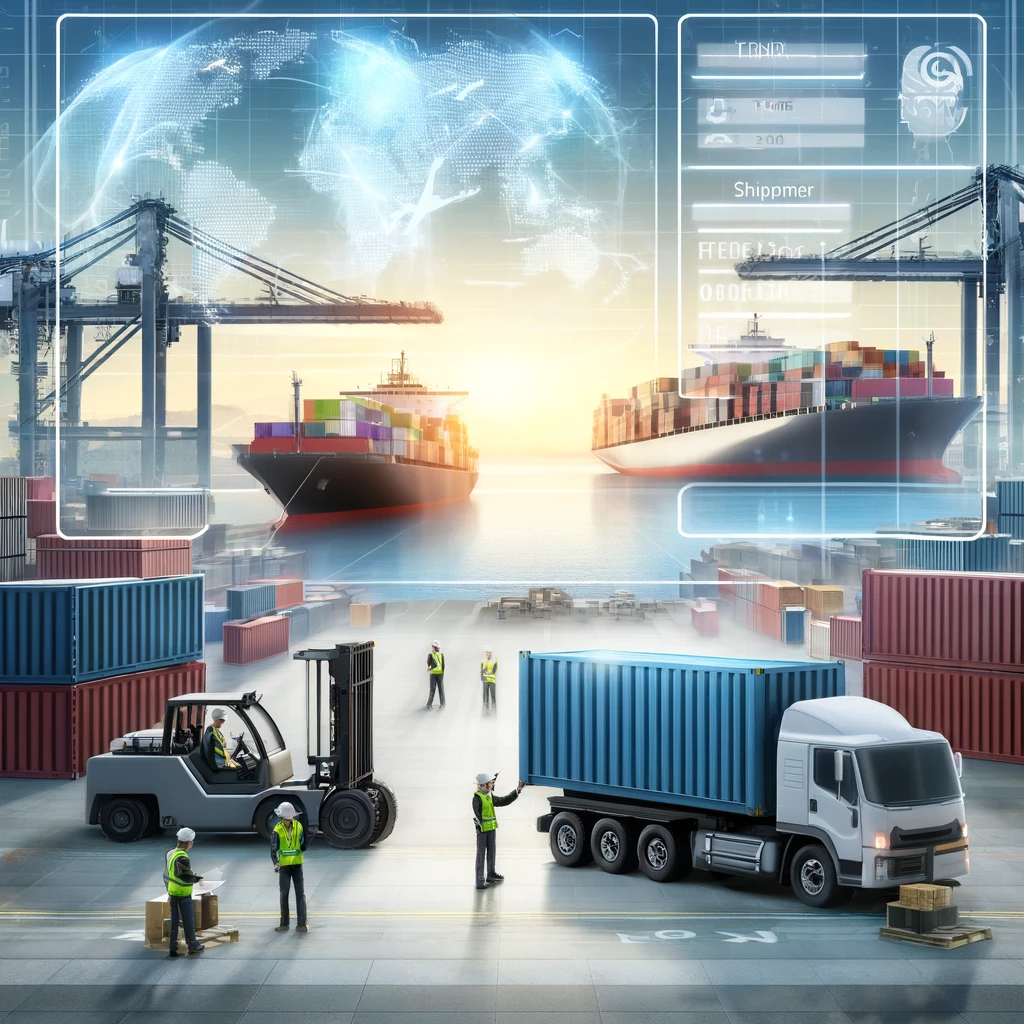
What Does Freight on Board (FOB) Mean?
Freight on Board (FOB) is an Incoterm (International Commercial Term) that specifies the point at which the seller’s responsibility for goods ends and the buyer’s responsibility begins. It determines:
✔️ Who pays for transportation costs?
✔️ Who bears the risk of loss or damage?
✔️ Who is responsible for customs clearance and import duties?
FOB terms are crucial for both importers and exporters, ensuring transparency in international trade agreements.
Key freight on board (FOB) Variations
There are two primary types of Freight on Board (FOB) agreements:
1. Freight on board FOB Origin (FOB Shipping Point) 🚛
- The buyer assumes responsibility once the goods leave the seller’s facility.
- The buyer covers shipping costs and assumes risks in transit.
- The seller is responsible only for loading the goods onto the transport vehicle.
- Commonly used in bulk shipments or large supply chain networks.
2. Freight on board FOB Destination 🏢
- The seller is responsible for delivering the goods to the buyer’s specified location.
- The seller pays for transportation costs and bears the risk until delivery.
- The buyer assumes ownership only when the goods arrive safely at their final destination.
- Common in business-to-business (B2B) transactions for smoother logistics.
🔹 Key Difference:
- FOB Origin: Buyer assumes risk earlier.
- FOB Destination: Seller retains responsibility until delivery.
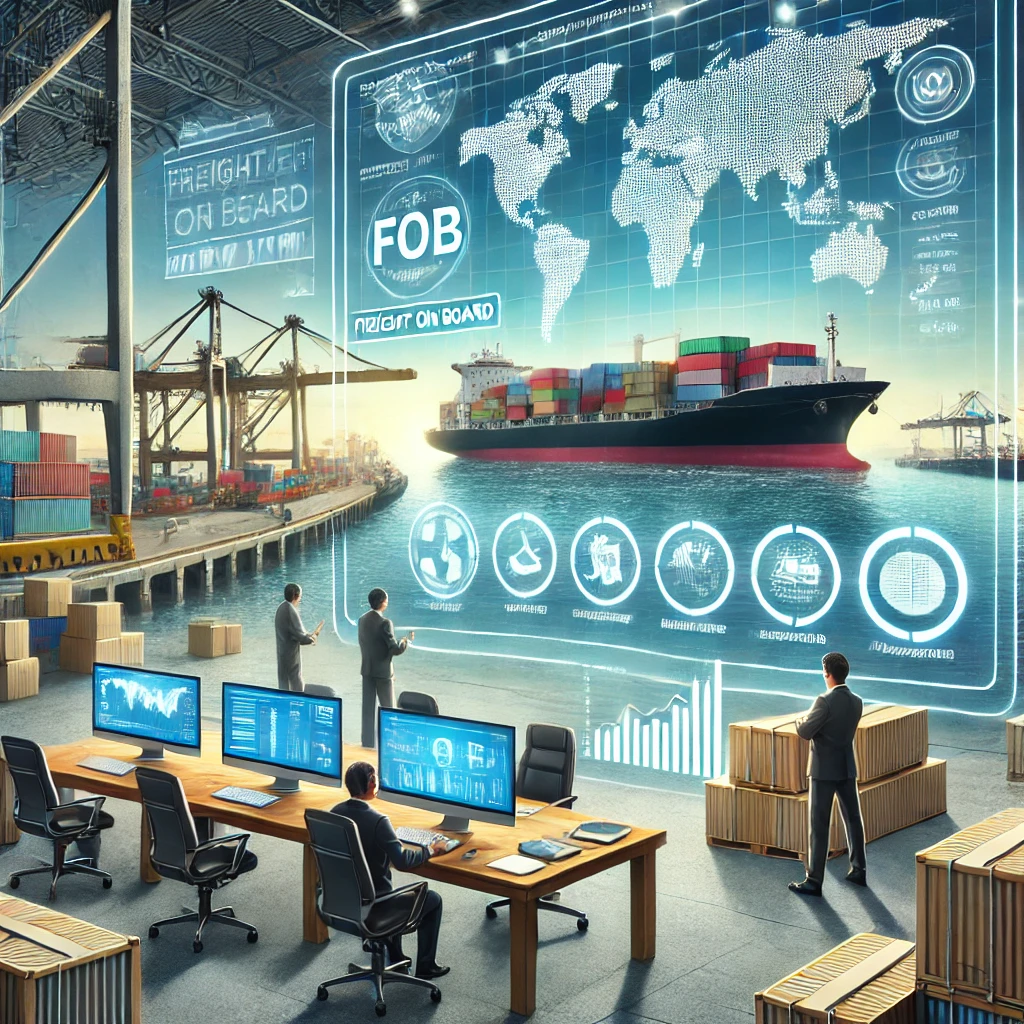
How FOB Works in Shipping
The FOB agreement defines specific costs and liabilities between shippers, carriers, and buyers. Here’s how it works:
✅ Step 1: Goods Are Prepared for Shipment – The seller packages and loads the goods for transport.
✅ Step 2: Transfer of Ownership (FOB Origin or Destination) – Depending on the agreed FOB term, ownership shifts either at shipment or delivery.
✅ Step 3: Transportation & Risk Transfer – The party responsible for transport handles freight, insurance, and any risks.
✅ Step 4: Customs & Importation – For international shipments, customs duties and clearance must be managed. ✅ Step 5: Delivery & Final Payment – The goods arrive at the destination, and payments are finalized.
Who is Responsible for Costs in FOB?
Cost Factor | FOB Shipping Point | FOB Destination |
Shipping Costs | Buyer | Seller |
Risk Transfer | At Seller’s Dock | At Buyer’s Location |
Import Duties | Buyer | Seller |
Customs Clearance | Buyer | Seller |
Freight Insurance | Buyer | Seller |
Understanding these costs prevents unexpected expenses and clarifies who handles logistics in a transaction.
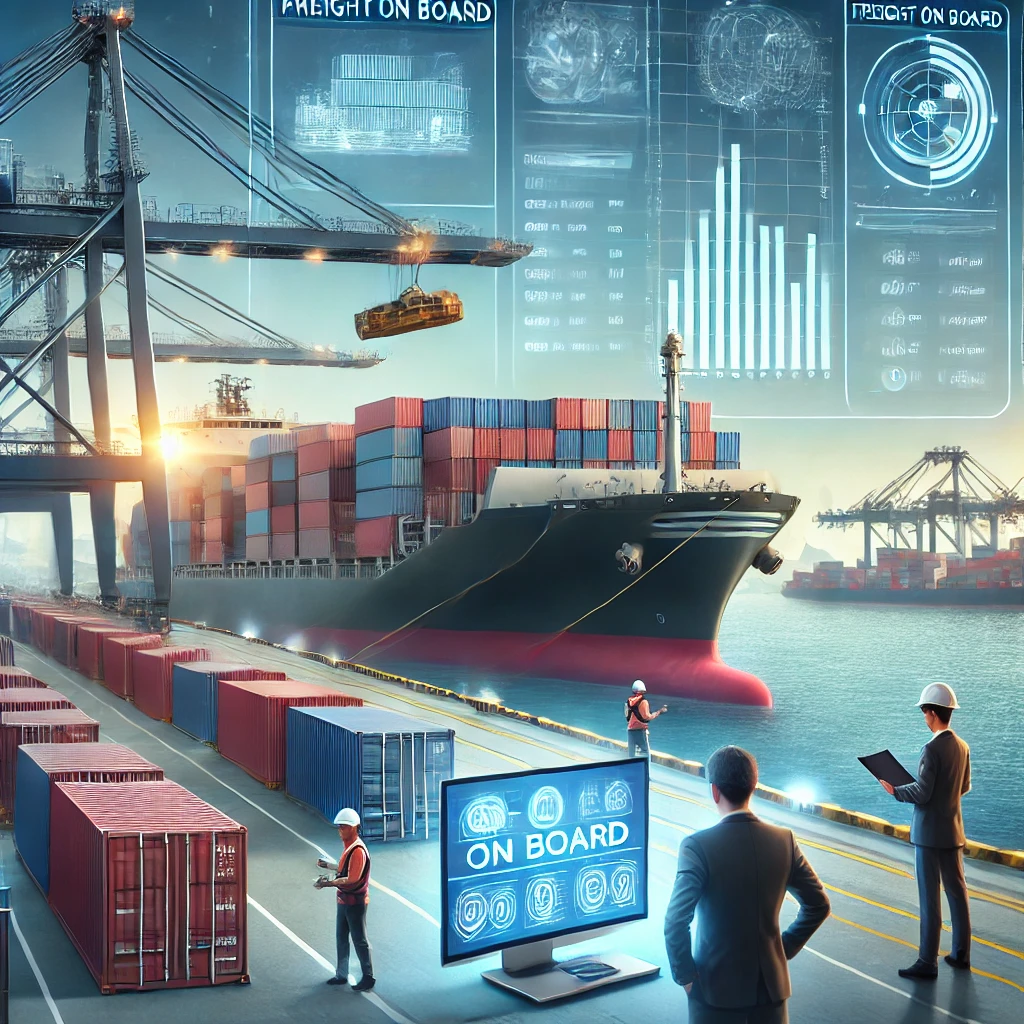
Advantages of Using (freight on board) FOB in Trade
✅ Benefits for Buyers:
✔️ Greater control over shipping logistics
✔️ Flexibility to choose the best carrier & rates
✔️ Cost efficiency in bulk shipping
✔️ Reduced risk of supplier markups on freight charges
✅ Benefits for Sellers:
✔️ Defined responsibilities & reduced liability
✔️ Faster shipping process without handling logistics
✔️ Streamlined international transactions
✔️ Fewer disputes over freight costs
Common Misunderstandings About FOB
🚫 FOB does NOT mean free shipping – The buyer or seller still pays transportation costs.
🚫 FOB is NOT always global – Some countries may have variations in FOB rules.
🚫 FOB does NOT include insurance automatically – Unless stated, insurance is arranged separately.
🚫 FOB does NOT cover all transport types – It mainly applies to sea and inland freight, not air shipping.
Best Practices for Using FOB in Contracts
✔️ Clearly define FOB Origin or FOB Destination in agreements.
✔️ Understand who pays for freight, insurance, and customs clearance.
✔️ Use trusted freight forwarders to manage shipments effectively.
✔️ Confirm all cost responsibilities in the purchase contract.
✔️ Consider logistics software to track FOB shipments in real time.

Frequently Asked Questions (FAQs)
Q1: Does FOB apply to all transportation methods?
📌 No. FOB is primarily used for maritime and inland shipping. For air freight, other Incoterms like CIF or EXW may apply.
Q2: Can a buyer choose their own shipping carrier in an FOB contract?
📌 Yes, if it’s FOB Shipping Point. The buyer arranges transportation and assumes costs. In FOB Destination, the seller chooses the carrier.
Q3: What happens if goods are damaged in transit under FOB?
📌 It depends on the FOB terms:
- FOB Origin: Buyer is responsible after shipment.
- FOB Destination: Seller is responsible until delivery.
Q4: Is freight on board FOB required in all international trade contracts?
📌 No, but it is one of the most commonly used Incoterms. Other terms like CIF (Cost, Insurance, and Freight) or EXW (Ex Works) may also be used.
Q5: How can I verify FOB terms in my contract?
📌 Always check the purchase agreement, bill of lading, and shipping invoice for FOB terms.
Conclusion
Understanding Freight on Board (FOB) is crucial for businesses involved in global trade and logistics. It affects cost distribution, liability, and logistics management. Whether choosing FOB Shipping Point or FOB Destination, companies should negotiate terms carefully to minimize risks, reduce costs, and optimize supply chain efficiency.
By following best practices and being aware of responsibilities, businesses can streamline operations, avoid unexpected costs, and ensure smooth transactions. 🌍🚢📦