
Key Insights on Define Ex Works
But what does Ex Works mean, and how does it impact shipping agreements?
In this guide, we’ll break down the definition of Ex Works, its key features, and its advantages and disadvantages for both buyers and sellers. 🚢📦

What Does Ex Works (EXW) Mean?
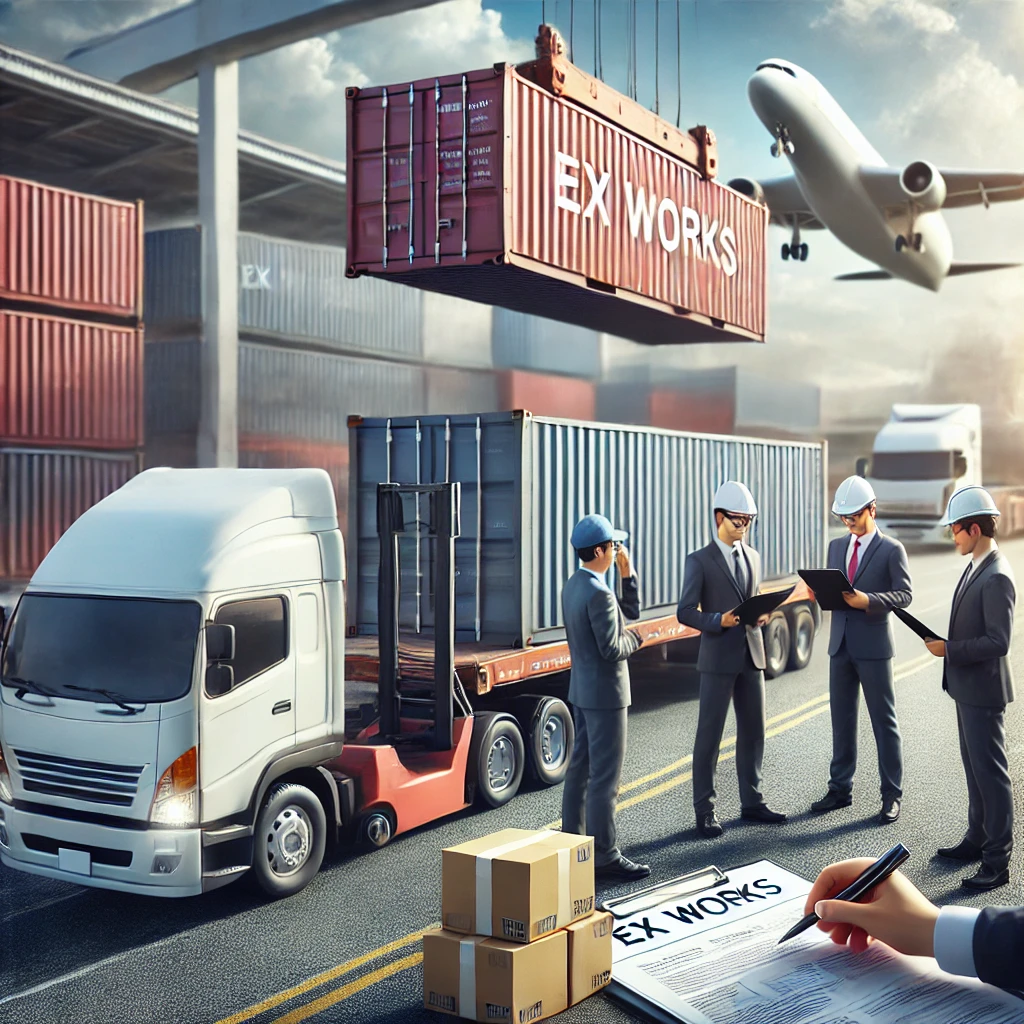
Ex Works (EXW) is an Incoterm that places maximum responsibility on the buyer. Under an EXW agreement, the seller’s only obligation is to make the goods available at their premises (e.g., factory, warehouse, or port terminal).
The buyer is responsible for:
✔ Arranging transportation from the seller’s location.
✔ Covering all shipping costs (including freight and insurance).
✔ Handling customs clearance and import duties.
✔ Managing the risks once the goods are picked up.
💡 Example: If a U.S. company sells goods to a European buyer under EXW terms, the buyer must organize the entire transportation process from the seller’s warehouse to the final destination in Europe.
Key Features of Ex Works (EXW)
✅ Minimum Seller Responsibility
✔ The seller does not need to arrange transportation or cover shipping costs.
✔ The seller’s responsibility ends once the goods are ready for pickup.
✅ Maximum Buyer Responsibility
✔ The buyer bears all transportation risks and costs.
✔ The buyer must manage customs clearance and any required export documentation.
✅ Suitable for Experienced Buyers
✔ EXW is ideal for buyers who have established logistics networks and can arrange shipping at lower costs.
✔ It may not be the best option for inexperienced importers, as they must handle all aspects of the shipment.
✅ Commonly Used for Factory Shipments
✔ Many manufacturers and exporters prefer EXW because it simplifies their responsibilities.
✔ Buyers dealing in bulk shipments or international supply chains often use EXW to control transportation costs.
Advantages & Disadvantages of Ex Works (EXW)
📈 Advantages for the Seller
✔ Lower Risk – The seller’s responsibility ends after making the goods available.
✔ No Shipping Arrangements – The seller does not need to handle transport or customs procedures.
✔ Attractive for Large-Scale Manufacturers – Companies producing goods in bulk can focus on production rather than logistics.
📉 Disadvantages for the Seller
❌ Limited Market Appeal – Some buyers may prefer suppliers who handle shipping.
❌ Potential for Delays – If the buyer is slow in arranging transportation, goods may remain in the warehouse longer than expected.
📈 Advantages for the Buyer
✔ Full Control Over Shipping Costs – Buyers can choose their preferred freight forwarders and negotiate better shipping rates.
✔ Flexibility in Transportation – Buyers can optimize logistics based on their supply chain needs.
✔ Better Customs Control – Some buyers prefer handling customs themselves to ensure compliance and reduce costs.
📉 Disadvantages for the Buyer
❌ Higher Responsibility & Risk – The buyer must arrange all transport and customs clearance.
❌ Potential for Unexpected Costs – If a buyer is unfamiliar with international shipping, they may face higher costs and complications.
❌ More Paperwork – The buyer must handle export and import documentation, which can be complex.
Ex Works vs. Other Incoterms: How It Compares
To understand where EXW stands in comparison to other Incoterms, let’s look at some common alternatives:
Incoterm | Seller’s Responsibility | Buyer’s Responsibility | Best For |
EXW (Ex Works) | Minimum responsibility; seller only provides goods | Full responsibility for transport, customs, and delivery | Buyers with strong logistics networks |
FOB (Free on Board) | Seller handles export clearance & loads goods onto ship | Buyer takes over once goods are on board | Common in sea freight |
CIF (Cost, Insurance, and Freight) | Seller pays for transport & insurance to destination port | Buyer covers import customs & delivery from port | Buyers preferring less responsibility |
DDP (Delivered Duty Paid) | Seller manages everything, including customs duties | Buyer receives goods without additional costs | Buyers wanting a hassle-free shipping process |
Key Difference:
✔ EXW gives buyers the most control, while terms like CIF or DDP place more responsibility on the seller.
✔ If a buyer is new to importing, define ex works EXW may not be the best choice, as it requires handling complex shipping logistics.

When Should You Use Ex Works (EXW)?
✅ Best Scenarios for EXW:
✔ When the buyer has strong logistics experience and can arrange shipping efficiently.
✔ When purchasing from multiple suppliers and consolidating shipments in one location.
✔ When the buyer has better access to lower freight rates than the seller.
🚫 When EXW Might Not Be Ideal:
❌ If the buyer is unfamiliar with export procedures and customs requirements.
❌ When the seller has better shipping rates, making terms like FOB or CIF more cost-effective.
❌ If the shipment involves complex logistics, such as handling dangerous goods or fragile items.
How to Handle Ex Works (EXW) Shipments Efficiently
If you’re a buyer working under EXW terms, follow these steps for a smooth shipping process:
1. Hire a Freight Forwarder
📦 Work with an experienced freight forwarding company to manage transport, customs, and delivery.
2. Arrange Pickup & Transport
🚛 Organize a trucking service to collect goods from the seller’s warehouse.
3. Handle Export & Import Documentation
🛃 Ensure all required documents are ready, including commercial invoices, export permits, and customs declarations.
4. Secure Cargo Insurance
🔐 Since the buyer bears all risks, investing in cargo insurance is highly recommended.
5. Track & Monitor Shipments
📡 Use a container tracking system to monitor real-time movement and avoid unexpected delays.
The Future of EXW in Global Trade
With advancements in logistics technology, define ex works EXW agreements are becoming more manageable for businesses. Future trends include:
🚀 Digital Freight Platforms – AI-based logistics systems that automate freight booking and tracking.
🚀 Blockchain for Trade Documentation – Enhancing security and transparency in customs procedures.
🚀 Smart Logistics & IoT Tracking – Real-time monitoring of shipments to reduce risks.
Businesses that leverage digital tools will have a competitive advantage in handling EXW shipments efficiently.
Conclusion
Ex Works (EXW) is a widely used Incoterm that places the least responsibility on the seller and maximum responsibility on the buyer. It is best suited for experienced importers who can manage shipping, customs, and logistics independently.
✔ Pros: Greater control over transportation and costs.
✔ Cons: Higher risk and responsibility for buyers.
By understanding define ex works EXW agreements, businesses can make informed decisions in international trade and optimize their logistics operations. 🚢📦💼