
AI Agents Roadmap for Logistics Teams: From Pilot to Scaled Intelligence
An AI agents roadmap for logistics teams provides clarity. It helps organizations move step by step—from small experiments to fully integrated, intelligent operations—without disrupting daily workflows or losing control.
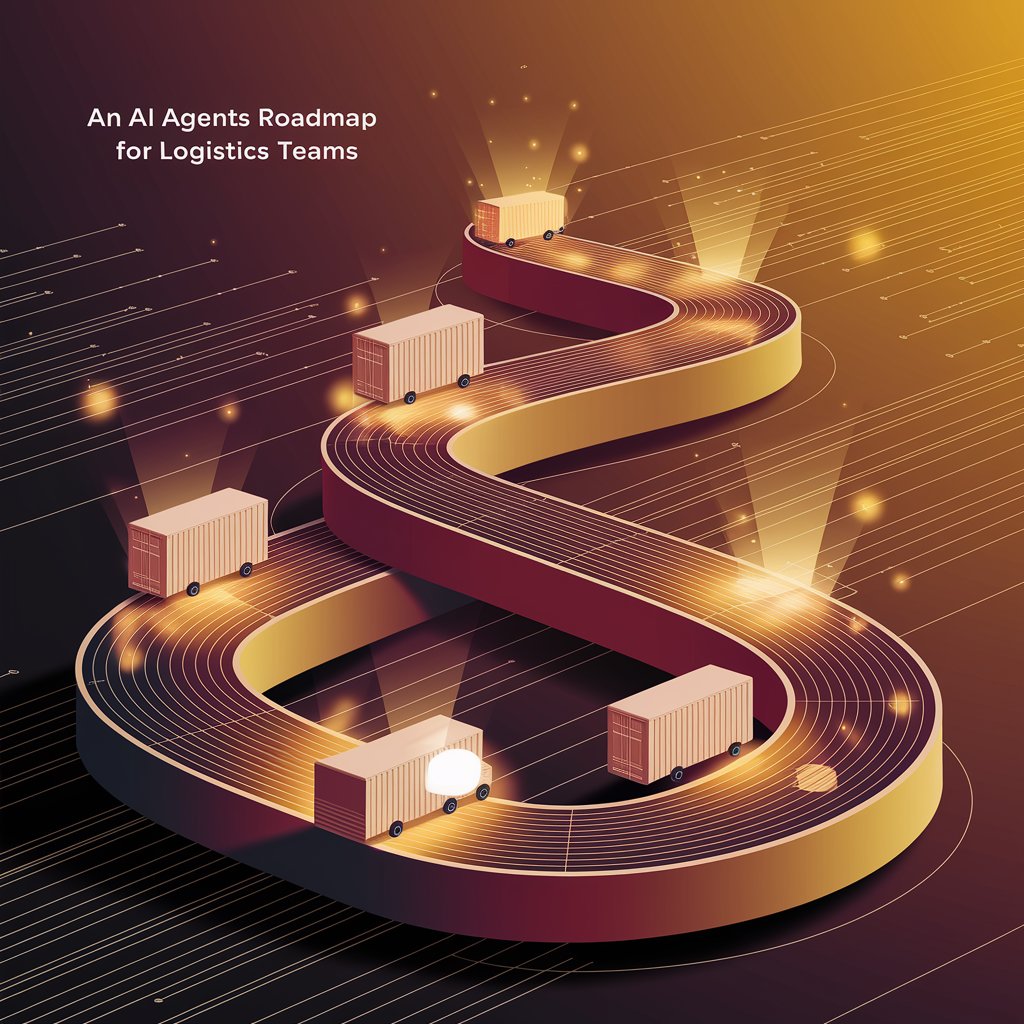
Step One: Identify High-Impact Problems
Every successful roadmap starts with a clear problem.
Look for areas with repetitive decisions, delays, or manual coordination.
Common starting points include shipment monitoring, inventory imbalance, or customer updates.
The goal should be specific and measurable.
Starting small reduces risk and builds confidence.
Step Two: Launch a Controlled Pilot
Pilots allow teams to test AI agents in real operational conditions.
One use case.
One agent.
Clear success metrics.
During this phase, teams observe how agents behave and interact with existing systems.
Feedback is collected early to refine rules and boundaries.

Step Three: Define Rules, Limits, and Oversight
AI agents should never operate without structure.
Teams define what agents can do and when humans must intervene.
Decision boundaries are documented clearly.
Escalation rules are established for critical scenarios.
This step builds trust across operations and leadership.
Step Four: Integrate with Core Logistics Systems
AI agents become powerful when they connect to real operational data.
Integration with TMS, WMS, ERP, and tracking systems is essential.
Agents should read and act on live data.
No system replacement is required—only smart connectivity.
This creates a unified decision layer across logistics.

Step Five: Measure Results and Optimize
Performance tracking is critical.
Teams monitor response times, cost savings, and error reduction.
Agents are refined based on outcomes.
Rules are adjusted as operations evolve.
This phase turns pilots into reliable operational tools.
Step Six: Expand to Multiple Agents
Once value is proven, expansion begins.
New agents handle routing, inventory, compliance, or customer communication.
Agents start collaborating with each other.
Operations shift from isolated automation to coordinated intelligence.
Scalability becomes a reality.

Step Seven: Build Long-Term Governance
As AI adoption grows, governance becomes essential.
Clear ownership is defined.
Audit trails and explainability are enforced.
Compliance and security standards are maintained.
Governance ensures AI agents scale safely and responsibly.
Conclusion
An AI agents roadmap for logistics teams transforms experimentation into strategy. By starting small, defining clear rules, integrating with core systems, and scaling gradually, logistics organizations can unlock real intelligence without operational risk.
As supply chains become more dynamic, a structured roadmap is the difference between isolated AI pilots and truly intelligent, future-ready logistics operations.