
The CRM that lives where freight sales actually happen: the inbox
Freight leads arrive as emails, get won as quotes, and stay won through visibility. A generic CRM watches from outside; this one runs the pipeline inside the operation.
The short answer: A freight forwarder’s CRM has one honest job: turn inbound demand into quoted, won, and retained business. In Linbis that means cold emails becoming proposed accounts and opportunities automatically (routed to the right rep by lane, deduplicated at the database), quotes that chase themselves with drafts a human sends, negotiation handled as a first-class feature, and a customer portal that keeps the won account informed without phone calls.
Leads: from cold email to pipeline, without typing
A cold inbound email becomes a proposed account, contact, and opportunity — routed to the right rep by lane and held for one-click confirmation. Duplicates die at the database: two colleagues emailing from the same company on the same morning produce one proposed account, not two, because the constraint lives in the data layer, not in hope.
Watch: an inquiry becomes a draft quote
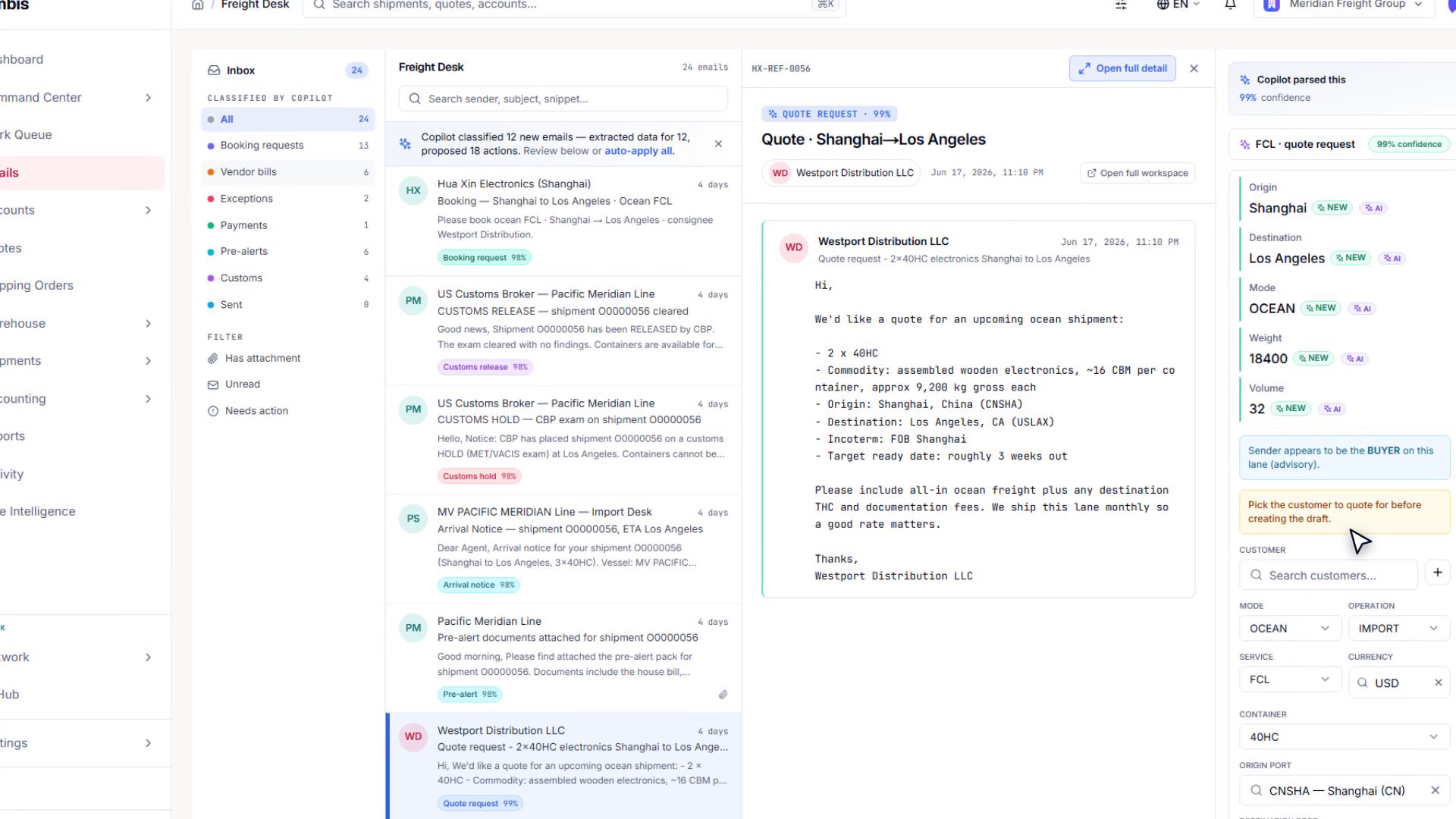
The freight desk reads the request, structures the cargo, asks for the customer, and prepares the draft — sales work done before the rep opens the thread.
Video transcript
The Linbis freight desk reads a quote request — two forty-foot containers, Shanghai to Los Angeles — and structures it at 98 percent confidence for the operator to approve into a draft quotation. Nothing is sent without a person.
A pipeline that matches how freight sells
Opportunities move through your stages on a drag-and-drop board, and quote stages carry real governance — entry requirements, manager-locked stages, actions that fire on entry. Quotes chase themselves: follow-ups at three, seven, and fourteen days are drafted automatically, and a person sends them. When the customer haggles, the counter-offer is parsed into a number and the rep gets three honest buttons: accept theirs, propose different, decline politely — with the outcome stored on the quote.
Retention is a portal, not a phone call
The won account stays won when they can see their own freight: a full customer portal — bookings, quotes, shipments, documents to approve, two-way messages — in eight languages, with access granted and revoked from the account record in two clicks. Internal notes stay structurally internal: the portal reads only what you mark shared.
Why CRM inside the TMS beats CRM beside it
A standalone CRM knows what reps typed. This one knows what actually happened: the quote’s real status, the shipment’s real milestones, the invoice’s real balance — because they are the same records. Handoffs disappear: the accepted quote converts to the operational file with parties, charges, and the rep carried across.
Frequently asked questions
What makes a CRM different for freight forwarders?
Freight demand arrives as email and wins as quotes. A forwarder’s CRM must read inbound requests, price against real rates, chase quotes, handle counter-offers, and keep customers informed through a portal — all connected to the operational file, not a separate database of typed notes.
How does lead capture work?
Cold inbound email becomes a proposed account, contact, and opportunity automatically, routed to the right rep by lane and held for one-click confirmation — with duplicates prevented at the database level.
Do quotes really follow themselves up?
Follow-ups at three, seven, and fourteen days are drafted automatically — and only drafted. A person reviews and sends. Expired quotes sweep themselves; nothing emails your customers autonomously.
What does the customer portal include?
Bookings, quote requests, shipments with tracking, documents to approve or reject, and two-way messaging — in eight languages, scoped per contact by the role you grant.
Sales and operations, one memory
Leads captured from the inbox, quotes that chase themselves, customers who can see — all on the same file.
Start Free TrialThe screens and clips on this page are the real Linbis product recorded on a demonstration company; workflows shown are production features.