
Logistics Traceability Software: Achieving Full Supply Chain Transparency
That’s where logistics traceability software becomes indispensable.

Introduction
By leveraging AI, IoT, and blockchain technology, this software provides real-time insight and accountability across every shipment, warehouse, and transport route. Whether it’s pharmaceuticals, food, electronics, or freight forwarding, traceability systems ensure accuracy, compliance, and trust in logistics operations. 🌎
In short, logistics traceability software is the key to building transparent, reliable, and data-driven supply chains.
What Is Logistics Traceability Software?
Logistics traceability software is a digital platform that tracks and records the movement of goods throughout the supply chain — from origin to final delivery.
Unlike simple tracking systems, traceability platforms capture detailed data at every stage of the logistics process, including:
- Product origin and batch details
- Storage and handling conditions
- Transportation routes and timestamps
- Temperature, humidity, and GPS location via IoT sensors
- Proof of delivery and chain-of-custody validation
By consolidating this information, logistics traceability software provides a complete audit trail of every item — ensuring transparency and accountability from start to finish.
How Logistics Traceability Software Works
Here’s how it delivers end-to-end supply chain visibility 👇
1️⃣ Data Capture
IoT sensors, barcode scanners, and RFID tags record product details, conditions, and movements in real time.
2️⃣ Data Integration
The system connects to ERP, TMS, and WMS platforms, creating a unified record of all logistics activity.
3️⃣ Blockchain or Cloud Storage
Each transaction is securely stored — often on blockchain for immutable, verifiable data.
4️⃣ Monitoring & Alerts
AI algorithms analyze data for deviations (e.g., temperature breaches, route delays) and send instant notifications.
5️⃣ Reporting & Compliance
The software generates compliance-ready reports for audits, recalls, or certifications automatically.
This seamless process turns fragmented logistics data into a transparent digital thread that follows each product across its journey.
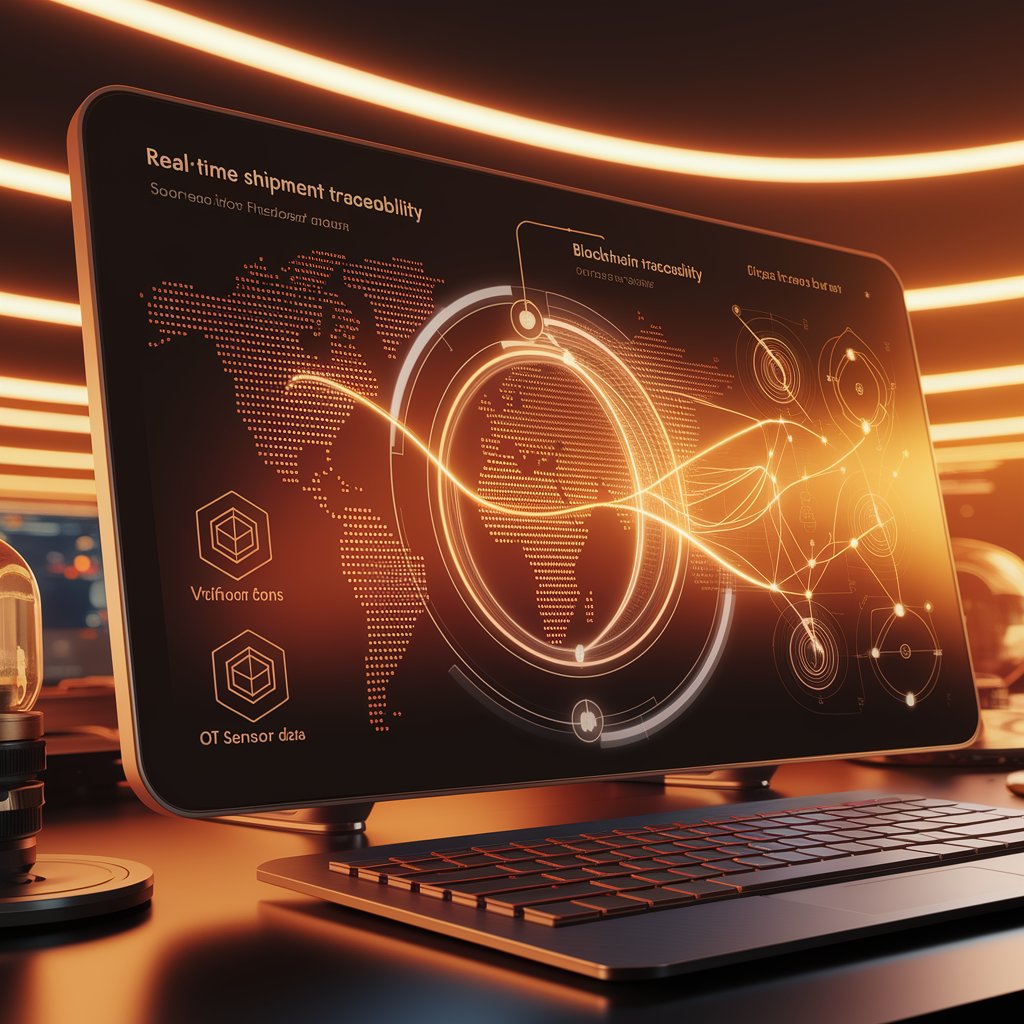
Key Features of Logistics Traceability Software
🔗 End-to-End Tracking
Monitor goods from supplier to end customer with full visibility of each logistics event.
📦 Batch & Lot Management
Record product identifiers, batch numbers, and expiration dates for precision in recalls or audits.
🌡️ IoT Condition Monitoring
Track temperature, humidity, and vibration to ensure product integrity during transport.
🔒 Blockchain-Backed Transparency
Guarantees tamper-proof records and authenticity of logistics transactions.
⚡ Real-Time Alerts
Instantly detect anomalies such as route deviations or delays, allowing immediate corrective action.
📊 Customizable Dashboards
Visualize logistics KPIs — shipment progress, carrier reliability, and inventory flow — from a single interface.
🧾 Regulatory Compliance Tools
Ensure adherence to standards like ISO, FDA, or EU traceability requirements.
Benefits of Using Logistics Traceability Software
🧠 1. Total Supply Chain Visibility
Gain 360° visibility across manufacturing, warehousing, and distribution networks.
📉 2. Risk Reduction
Identify issues early — from damaged goods to missing shipments — and take immediate action.
💰 3. Operational Efficiency
Automated documentation and tracking minimize manual errors and administrative costs.
🔐 4. Enhanced Security & Authenticity
Blockchain records and encrypted data prevent counterfeiting or record manipulation.
⏱️ 5. Faster Recalls & Audits
Locate specific batches or shipments instantly in case of regulatory recalls or compliance checks.
🌱 6. Sustainability & ESG Reporting
Track carbon footprint, ethical sourcing, and responsible transport practices with verifiable data. 🌍
Industry Applications
Pharmaceuticals & Healthcare
Ensures compliance with FDA and EU serialization laws, preventing counterfeit medications.
Food & Beverage
Monitors temperature and expiration data to maintain freshness and enable rapid recall response.
Automotive
Tracks parts and materials throughout complex supplier networks for quality assurance.
Manufacturing
Provides visibility into raw material sourcing, production, and finished goods logistics.
Freight Forwarding & 3PLs
Enhances transparency between clients, carriers, and shippers with live traceability reports.

Integration with Supply Chain Systems
Logistics traceability software works best when integrated with:
- TMS (Transportation Management Systems): To capture live shipment and carrier data.
- WMS (Warehouse Management Systems): For precise inventory and batch tracking.
- ERP (Enterprise Resource Planning): For financial and compliance integration.
- CRM (Customer Relationship Management): To provide shipment transparency to clients.
This interconnected setup creates a digital supply chain ecosystem where data flows freely, accurately, and securely.
Case Example: Traceability in Action
A global food distributor adopted logistics traceability software to improve compliance and sustainability. After implementation:
- Product recall time decreased by 78%
- Operational transparency increased to 95%
- Customer trust improved significantly
- Manual tracking errors dropped by 60%
The system provided real-time monitoring across suppliers, warehouses, and delivery networks — ensuring product integrity and safety.

The Future of Logistics Traceability
The next generation of logistics traceability software will bring even greater automation and intelligence through:
- AI-driven predictive alerts for potential non-compliance events
- Digital twins of supply chains for traceability simulation and optimization
- Advanced blockchain integrations for multi-party data collaboration
- Sustainability traceability, tracking carbon impact per shipment
- 5G IoT networks for ultra-accurate, live location data
The future of logistics traceability is transparent, automated, and data-verified — redefining trust in global logistics. ⚙️
✅ Conclusion
In an increasingly interconnected world, logistics traceability software is the foundation of transparency, compliance, and customer trust.
By combining AI, IoT, and blockchain, it delivers real-time visibility, accuracy, and accountability across every step of the supply chain.
For logistics professionals, adopting traceability tools isn’t just about compliance — it’s about building smarter, safer, and more reliable operations.
In modern logistics, visibility isn’t optional — it’s the key to excellence.